Skip Navigation

InitialsDiceBearhttps://github.com/dicebear/dicebearhttps://creativecommons.org/publicdomain/zero/1.0/„Initials” (https://github.com/dicebear/dicebear) by „DiceBear”, licensed under „CC0 1.0” (https://creativecommons.org/publicdomain/zero/1.0/)F
Posts
32
Comments
286
Joined
1 yr. ago

  • Short term versus long term trends. The short term events come and go without a lasting change. We want to know what the signal from the long term trend is.

  • the CO2 to a large part remains in the air for thousands of years

    A few years ago I was thinking about this debate around nuclear power.

    While nuclear power plants create a lot of electricity without carbon, they have this super scary spent fuel nuclear waste that lasts thousands of years!

    And then, all of a sudden I saw it: *CO2 dumped in the atmosphere lasts 10X longer than nuclear waste . *

  • You need to look for hope outside of the physical material realm.

    For example, people can care more, write more beautiful books and plays, invent a super cool new game that's better than chess, come up with all kinds of wonderful creative stuff...there is no limit to human empathy, meaning, quality of experience etc.

    Like, right now in the united states around 60% of the population is semi illiterate and most people are uneducated. There is an absolute ton of progress that can be made on the human development side. There is almost an endless number of things that need someone to care about them.

    A lot of our "stuff" doesn't make us happy, it's just dopamine.

    Things could be so much better if we could slow down.

  • Fixing the ozone layer was a technically tractable problem.

    The climate change and carbon capture don't have any workable at-scale solution. And until we can find a massive energy source that's not fossil fuels we have no theoretical method of capturing the amount of carbon necessary on a meaningful time scale. This is because of the basic physics, like it's a law of nature we can't avoid that limits us technologically.

    When the original fossil fuels were burned, you had a high quality energy material that was really in a concentrated form. When the fuel was used it released heat and energy and the resulting emissions were released into the atmosphere where it diffused down to a trace concentration level of ~400 parts per million.

    So setting aside the technology needed to do carbon capture, we can basically do a napkin sketch of the scale of energy needed. Basically, there are three main costs to the project.

    • you need to capture the carbon. This will be a thermodynamic cost that's around as much energy as was released from the fossil fuels in the first place (just running backwards)
    • you need to take the entire earths atmosphere and filter out the carbon from everything else. There is an absolute theoretical minimum energy needed to handle this amount of CO2 and concentrate it that's probably 200kw/h per ton if you use machines for direct air capture (not growing plants etc). With the current CCS tech that we have developed, it literally costs more energy to run this one step than what the original fossil fuels released
    • by now you have tons and tons of carbon and it has to be stored somewhere which would be a physical feat with a scale that's on par to the combined industrial activities of the current civilization. Massive mines, drilling and digging deep into the ground, giant containers moving around, pipelines being built etc

    The exact numbers don't exactly matter but this is a way bigger way more industrial and way more energy intensive process than everything humans have ever done in history all put together.

    Oh yeah... One other pesky detail:

    • we need to do this super fast also. Many things that could happen slowly over centuries are easy. But doing this in a decade or two is very very complicated and has huge power costs

    So what happens in this area is that people point at a small staircase that goes to the second story of a house and say... "We know how to build stairs, we just need to start doing it if only our leaders and fossil fuel corporations..."

    No, you can't take stairs all the way to SATURN That's SO FAR BEYOND realistic that there is no point in anyone wasting any time or money or resources on even pretending to try.

    So people drop "we have carbon capture technology, we just need to do it" they say this as if the tech that we developed simply existing means everything hard is solved.

    Not only is that not the hard thing, the HARD issue makes it seem incredibly unlikely we can do it without discovering an energy source.

  • Climate Crisis, Biosphere & Societal Collapse @sopuli.xyz

    The Age of Unstoppable Wildfires Has Reached Europe

    www.bloomberg.com /graphics/2026-europe-summer-wildfires/
  • Pacific Northwest - OR,WA,BC @lemmy.world

    Hundreds evacuated from wildfire burning in North Spokane, fire grows to 2500 acres

    www.kxly.com /news/wildland-fire-north-of-airway-heights-forcing-increased-level-3-go-now-evacuations-to-the/article_e1889507-edd8-4efd-8670-949a1f3c9b49.html
  • I'm familiar with Jevons as a demand side phenomenon.

    I think the supply side is known as Wrights Law: costs drop when production increases?

  • That's pretty much exactly my thought.

    When you look at our industrial civilization, all the critical resource flows are basically running on very high power equipment. That's stuff like ships, trucks, trains, tractors, airplanes, construction equipment, rockets, heavy machinery etc.

    For any of those things to work, they require very large amounts of power and a very good weight to power relationship.

    None of these seem to have any serious technical substitute. Notice there are no obvious "green" versions of any of these devices. You can do some of the things more efficiently, but apparently you cannot substitute for the power required.

    A green tractor that has a battery big enough to replace the power of a diesel motor will sink into the dirt and not have the traction needed. It will be too big and heavy. A battery big enough to pull a semi trailer a good distance weighs as much as the loaded trailer, etc. A battery airplane is too heavy to lift a cargo and fly to another continent. Etc.

    Diesel is around 35X as energy dense as batteries on a watts / kg basis.

    A gallon of diesel has as much energy as a 200lb battery. So when a semi takes 150 gallons, that would be a 30,000 lb. battery. If the electric motor is twice as efficient, it's still a 15,000lb battery. A semi pulls 50,000lbs max...

    Think of the system now. If every single semi loses 30% of its towing capacity, sure the motors can be more energy efficient but you might need 30% more trucks to do the work. At some point we have 500 horses instead of 1 locomotive. It's not really a clear advantage.

  • And the hares suffer the same fate as the bunnies.

    You probably mean that the hares suffer the same as the tortoises.

    But inverting that, the tortoises suffer the same fate as the hares, right?

    So it's not efficiency that matters. Here are two groups that pursue different efficiency optimums, and it makes no difference?

  • energy density (in terms of time)

    The amount of joules per unit of times is POWER, measured in watts

    Efficiency is a concept that has no units. Efficiency just looks at how many joules get wasted that isn't the work you want to do.

    However, notable is that nearly every physical process does not maximize efficiency when it maximizes power. This means you have to throw out power or reduce power to optimzed efficiency, which is the cost of pursuing efficiency to living systems.

    Life's goal is that life maximizes the rate, not the efficiency. The amount of waste product is generally not important.

    Efficiencies free up resources to be utilized for whatever your civilization values.

    Or you can simply grow your resources you're exploiting.

    Let's say you have

    Turtle species A that eats three pizzas a week. Hare species B that easts three pizzas a week.

    Turtles decide to order 2 pizzas and save $ off the budget and carefully manage the leftovers to reduce spending. If they went to the downward limit, they could save no more than 3 pizzas reduction.

    Hares put 5 pizza restaurants on speed dial and throw the budget out and have a massive pizza party paid for with credit cards. There is not any upward limit to this growth.

    Who wins the life race?

  • I should have said, "produce the work energy"

    I'm trying to frame it so that it's completely obvious that energy and power are not fungible by picking a very unequal example. Many people are confused on this point.

    Energy is not power. Power is not energy. Just because two things are equal in energy terms does not mean they are equal in power terms.

    The relevance of this idea is that it's fundamentally the same idea that's baked into the accounting around the green energy transition or other similar ideas. Basically its that "if we had enough horses, we'd have a locomotive" is a clear fallacy.

    I think right now we are using 400 years worth of sunlight energy every year in fossil fuels. So yes, If you could make solar panels that are more efficient than photosynthesis, it might make efficiency sense from an engineering standpoint to cover farm fields in solar panels.... Like plants are less efficient...

    But the bigger question is whether we are even within an order of magnitude on the power side. Like, we are focusing on a very weird metric as if that's a goal. The REAL goal is the power we need. We need that energy to be delivered as fast as fossil fuels delivers it and converts to work

  • Ok, let me explain my confusion here.

    Let's assume

    • 500 horses produce the energy of 1 locomotive
    • 500 horses are cheaper than 1 Locomotive
    • 500 horses do the same work as 1 locomotive

    You would argue that horses are a better return on investment.

    However, if we consider POWER (the time dimensions) like how fast this work can get done, the locomotive is better than the horses even if it costs more. Who cares what it costs?

    Also

    • nobody pays $ for the energy component of fossil fuels, they only pay for PROCESSING the fuel. The energy in the fuel was put there without any human work, it's just as free as any sunlight only a lot faster, it's basically arbitrary how fast we choose to use it
    • converting free sunlight into alfalfa into horses into work takes months, the rate is limited
    • wasting energy you got for free has no penalty as long as you get anything above a zero return
    • 5000 or 50000 horses are not as fast as a locomotive, and they can never be
    • if a locomotive cost 500,000 horses, it would still be faster and it might be so fast it could replace 5 million horse's work per a given time period
    • in biology and nature, organisms win by maximizing power, not by maximizing efficiency
    • in human societies, the societies with more absolute power have dominated those with higher efficiencies. E.g., think of the Amish people within the USA versus the dominant society.
  • I really don't understand this thought, but I want to. A friend of mine was basically saying something similar, and I just can't follow this idea.

    To my way of thinking about it, to convert a lot of nitrogen into fertilizer and and run tractors, you need a power source that has a very large energy power output value, period.

    But what my friend was saying was that basically energy efficiency is what matters. Eroei is basically a measure of this (output per unit of input).

    Can you explain this thought? Is there a baked in assumption you're not explicitly stating? Why do we care how much energy it costs us?

    Example:

    Let's say I want to run tractor X and it needs 10 solar panels of 1:50 power production. Can't I also just run 20 panels of 1:25 efficiency? (Same top level power, worse efficiency conversion.)

  • Usually rain doesn't put out fires.

    Cold weather and snow usually do during the next winter.

    Sometimes the fires come back the following spring even after rain, snow and winter (holdover / zombie fires).

  • You're not allowed to die this close to an election.

  • This is violence against everyone in Oregon.

    The specific areas on fire are among the most MAGA parts of Oregon, ironically.

  • Pacific Northwest - OR,WA,BC @lemmy.world

    As over a million acres burn, FEMA denies aid to Oregon

    kepw-wholecommunity.news /2026/07/28/as-over-a-million-acres-burn-fema-denies-aid-to-oregon/
  • Mountain Biking @lemmy.world

    14-year-old dies in electric motorcycle crash at Seattle bike park

    komonews.com /news/local/teen-dies-in-electric-motorcycle-crash-in-seattle-police-department-colonnade-bike-park-interstate-5-law-enforcement-body-injuries
  • https://www.cnet.com/home/kitchen-and-household/heres-how-much-it-costs-to-have-groceries-delivered-versus-shopping-in-person/

    You're probably paying about 10% higher than a middle-range supermarket for the convenience.

    Like, they may not advertise a special delivery "fee" but the delivery costs are baked into the costs of the food items.

    It just goes to my point that most Americans have the luxury of not being price conscious and not even caring about it.

    I think there is a Marxist joke here somewhere about how a person doing an absolutely bullshit job sitting in a Hermann Miller Aeron chair in an air conditioned office snacking on Doritos is not a revolutionary. Life is super cushy for a lot of folks, and it's hard to rebel against something that is this undifficult.

    In the developing world, people are struggling for those things they actually need at a basic level.

  • I don't understand how you are not on the streets, rioting.

    I think there are two big reasons for this.

    Thing #1 is that the USA is highly divided and individualistic. People literally don't see themselves as being part of a bigger thing. There is no sense of class consciousness or social organization.

    Thing #2 is that food is super cheap and still affordable. I think the average American spends about 10% of their income on food [ * ] . When that 10% goes up 30%, now you're spending 13%, so it's a small increase. (In comparison, Canadians spend around 22%!).

    The percent increase is notable, but the impact to your life is quite small. The main people who seem to be affected by inflation are those on a fixed income (retired, disabled etc who are not keeping up with rapid price changes).

    [ * ] For an American it's a mere 5% on groceries and the other 5% on eating out in restaurants, which is pretty optional for a lot of people. The average american spends about 55% of their food budget on dining out. There is a trend in restaurants where the prices have increased a lot, so people are visiting restaurants less and spending more each time, so sales in $ terms are holding steady while people dine out less frequently. This is some of the slack in the system that will shift before people riot. Another weird detail is that grocery stores compete on ambiance but not on price. You can go to a spacious dimly lit quiet supermarket and pay $$$ or you can go to a basic crowded warehouse style supermarket and pay $ for the exact same item. So as the article mentions, you can change your shopping habits to change your budget without changing what you eat. Many of my neighbors actually pay for grocery delivery services. Like the degree of luxury and disposable income is hard to imagine in other countries... Some people are close to the edge, but most people have lots of slop in their budgets already.

  • Figure 3 and Figure 4 are wild.

    The main point of the paper is that "yes, warming has accelerated".

    But figure 3 and figure 4 show us HOW MUCH. According to their charts, the rates of warming basically held steady between 1960 and 2015 in a long plateau, then basically doubled in an instant. Doubled. And they are really certain of it.

  • If I follow the article correctly, what Hansen is saying is that the media will say this.

    Media: the warming is as bad as the IPCC predicted, but we add to that this super nasty El Niño which is temporary and worse.

    But the science is this.

    Science: warming is even worse than the IPCC predicted, and BECAUSE its so bad, it created this super bad El Niño which now only confuses the public about how bad it really is in the absense of the El Niño event...

    The temperature is the temperature, but these narratives run to almost opposite understandings.

  • collapse @lemmy.zip

    Apocalypse Bunker Fails as Wealthy Residents Turn on Each Other

    futurism.com /future-society/apocalypse-compound-fails-wealthy-residents-turn-on-each-other
  • collapse @lemmy.zip

    Net release of CO2 from thawing permafrost soil carbon predicted to occur earlier in this century

    www.science.org /doi/10.1126/sciadv.adz8478
  • collapse @lemmy.zip

    Earth's Energy Imbalance More Than Doubled in Recent Decades

    agupubs.onlinelibrary.wiley.com /doi/10.1029/2024AV001636
  • collapse @lemmy.zip

    The International Monetary Fund (IMF) warned the US-Israel war with Iran could plunge the global economy into recession

    www.bbc.com /news/articles/c4g66p2q075o
  • collapse @lemmy.zip

    HSBC warns oil chaos threatens $47B in energy loans

    themeridianews.com /news/hsbc-warns-oil-chaos-threatens-47b-in-energy-loans
  • collapse @lemmy.zip

    Are we heading for ‘super El Nino’ this summer – and what could we expect?

    www.theguardian.com /environment/2026/apr/13/el-nino-explainer
  • collapse @lemmy.zip

    There Is No "Next Economy"

    thehonestsorcerer.substack.com /p/there-is-no-next-economy
  • collapse @lemmy.zip

    The Iran War Just Broke the Petrodollar

    archive.fo /20260406041307/https://www.bloomberg.com/opinion/articles/2026-04-06/the-petrodollar-loop-supporting-the-treasury-market-is-broken
  • Climate Crisis, Biosphere & Societal Collapse @sopuli.xyz

    The 2026 Southwest U.S. heat wave was one of the six most astonishing weather events of the century » Yale Climate Connections

    yaleclimateconnections.org /2026/04/the-2026-southwest-u-s-heat-wave-was-one-of-the-six-most-astonishing-weather-events-of-the-century/
  • Not The Onion @lemmy.world

    Everest guides accused of poisoning foreign climbers to force fake rescues

    www.independent.co.uk /travel/news-and-advice/everest-climbers-sherpas-fake-rescue-scam-poisoning-b2950597.html
  • collapse @lemmy.zip

    'The planting season is now,' but war in Iran has sparked a global fertilizer shortage

    www.pbs.org /newshour/world/the-planting-season-is-now-but-war-in-iran-has-sparked-a-global-fertilizer-shortage
  • collapse @lemmy.zip

    Harvard business review: The Oil Shock Is Here. And We’re Just Beginning to Feel It.

    hbr.org /2026/03/the-oil-shock-is-here-and-were-just-beginning-to-feel-it
  • collapse @lemmy.zip

    False solutions: How do fossil fuel companies reproduce their power through the energy transition

    www.sciencedirect.com /science/article/pii/S2214629625004487
  • collapse @lemmy.zip

    Humanity heating planet faster than ever before, study finds
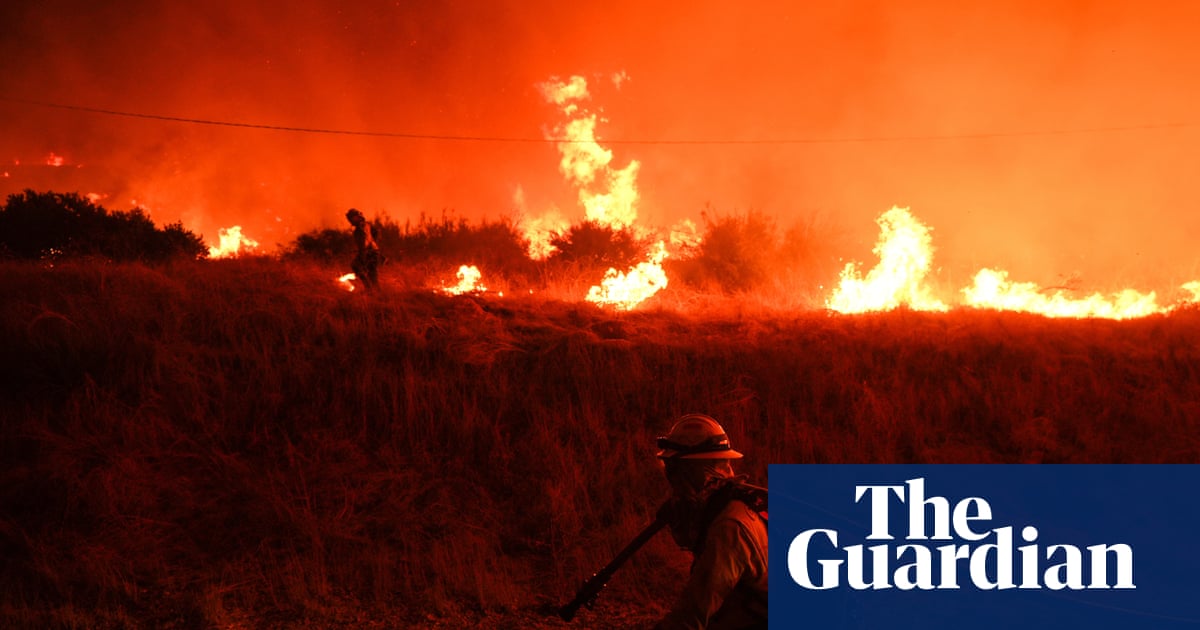
    www.theguardian.com /environment/2026/mar/06/humanity-heating-planet-faster-than-ever-before-study-finds
  • collapse @lemmy.zip

    Kevin Anderson: "A Velvet or Violent Climate Revolution: which will we choose?"

  • Mountain Biking @lemmy.world

    Annual bike imports fall to lowest number in at least a decade

    www.bicycleretailer.com /industry-news/2026/02/26/annual-bike-imports-fall-lowest-number-least-decade